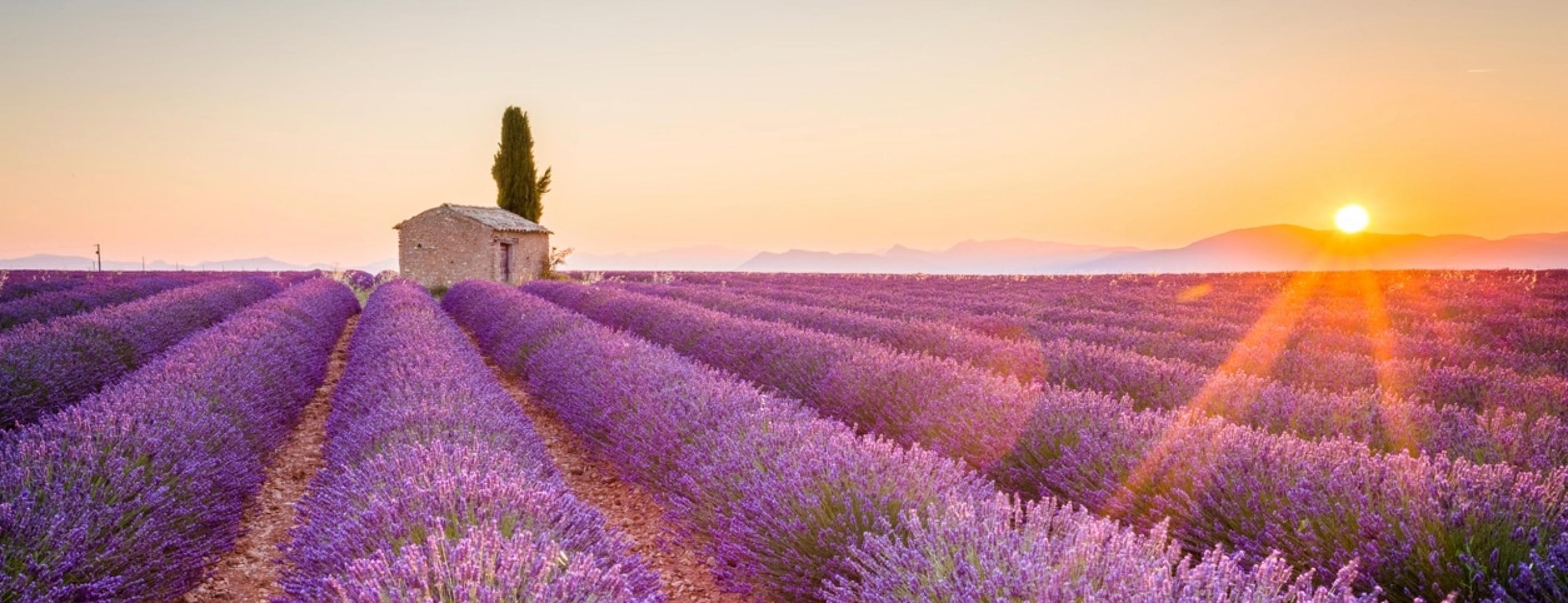
Découvrez le plateau de Valensole, un joyau de la Provence réputé pour ses paysages à couper le souffle. Surnommé le "plateau des lavandes", ce site emblématique offre un spectacle enchanteur lorsque ses champs de lavande et de blé ondulent sous la brise, teintant l’horizon de nuances de violet et d’or.
Idéalement situé entre les Alpes-de-Haute-Provence et les Gorges du Verdon, le plateau de Valensole est une invitation à la flânerie et à la découverte. En été, laissez-vous émerveiller par les couleurs et les senteurs qui font la renommée de la région. Découvrez également les villages pittoresques des environs, les marchés locaux, et les producteurs de miel et d’huiles essentielles. Le plateau de Valensole est une destination incontournable pour les amateurs de nature, de photographie et de sérénité provençale.

Plateau de Valensole
A must-see in Provence
The Valensole Plateau is one of the natural wonders of Provence, located in southeastern France. Covering approximately 800 square kilometers, this vast plateau is best known for its lavender fields, which bloom and envelop the region in an intoxicating fragrance every summer, usually from mid-June to mid-July.
The sight of purple fields stretching as far as the eye can see under the bright Provençal sun is an iconic image that attracts photographers and visitors from all over the world.
Visiting the Plateau de Valensole is a complete sensory experience: the sight of lavender in bloom, the sound of the wind in the olive leaves, the feel of tall grasses, the taste of local products such as lavender honey, and above all, the captivating scent of lavender that stays with you long after you leave.

Campsites and Ushuaïa Villages sites near the Plateau de Valensole
Find out more
In addition to its natural beauty, the Valensole Plateau is rich in history and culture. The region is dotted with small, typical Provençal villages such as Valensole, where time seems to have stood still. These villages are bastions of Provençal culture. They offer visitors a glimpse of traditional rural life with their local markets, village festivals, and rustic architecture.
For nature lovers and hikers, the plateau offers several hiking trails. These wind through the fields and offer exceptional views of the Alps and surrounding valleys. It is also a popular site for cycle tourism, thanks to its quiet roads that wind through picturesque landscapes.
Tourism and leisure
For vacationers, the plateau offers not only hikes through its magnificent landscapes, but also the opportunity to visit lavender farms where they can learn about the lavender oil production process. The scenic roads offer ideal vantage points to admire the vast purple expanses and capture the beauty of the region in photos. Activities such as cycling, paragliding, and horseback riding are also available, offering unique ways to explore this exceptional landscape.
Lavender and lavandin: what's the difference ?
Lavender and lavandin are often mentioned in the context of Provence and the cultivation of aromatic plants. But they differ in several important ways, particularly in terms of botany, scent, and use.
Botanical distinctions
Lavender (Lavandula angustifolia): Also known as true lavender or fine lavender, this is the purest and most traditional form of lavender. This species is prized for its low-growing clumps and long flower stalks bearing pale purple flowers. It is native to the mountains of the Mediterranean basin and requires specific growing conditions, such as well-drained soil and plenty of sun.
Lavandin (Lavandula x intermedia): Lavandin is a natural or cultivated hybrid between true lavender (Lavandula angustifolia) and spike lavender (Lavandula latifolia). It is more robust, produces more essential oil, and grows in larger clumps with longer stems than true lavender. Its flowers are generally darker and more fragrant.
Applications and Uses
Lavender: It is mainly used for its relaxing and therapeutic properties. True lavender oil is preferred for medicinal applications and high-quality skin care products.
Lavandin: With its more abundant oil production and lower cost, lavandin is often used in a wide range of commercial applications. You will find it in air fresheners, detergents, and scented candles, among other products.
In summary, although visually similar and closely related, lavender and lavandin serve different purposes due to their distinct botanical and chemical properties. The choice between one or the other will depend on the specific use intended and the desired aromatic qualities.
Where is the point of interest located ?
20 km from Manosque, 40 km from Digne-les-Bains, and 100 km from Aix-en-Provence, the Valensole plateau unfolds its vast expanses of lavender and wheat fields, emblematic of Provence. Bathed in light and enchanting scents, this place invites you to enjoy a getaway surrounded by nature and tradition.
Plateau de Valensole
04200 Saint-Geniez